
5 Early Signs These Best Friends from Brissy are Building a Unicorn

A few weeks ago, Polinate accepted a spot in Y Combinator’s W26 batch. Brisbane’s own Adeep Mitra and Corey Berther got the call from YC General Partner Ankit Gupta, packed their lives into suitcases, and flew to San Francisco just in time to catch the NYE fireworks. Now the rest of the world knows that Pollinate is going UP.
I was lucky to watch Corey and Adeep start Pollinate in my Ventures founder program, Validate. From the beginning, you could tell they were going to make it. But to vouch for early-stage founders, you have to see things worth vouching for.
First, understand the co-founders:
“Me and Corey are really obsessed with being fast; if we agree on one thing, we can always agree on being quick, which is really nice because we end up developing stuff really quickly.”

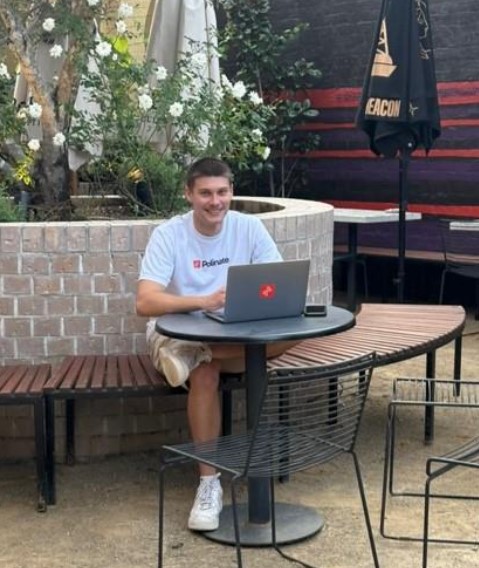
- Adeep is motivated. If he cold-calls a customer twice with no answer, the third time he’s rocking up to their front door. He’s at peak form when he’s wearing his Corteiz tee and his signature “all night coding" bed-head.
Corey has been leading the pack in cutting edge tech. Since day 0, he’s been in a daily race to integrate cutting-edge AI into clunky enterprise tech stacks. He is always 1) in Nike Air Force 1s and 2) grinning.
Here are 5 observations from their first months that convinced me Pollinate is building a unicorn:
Starting without their own idea.
They showed up as best friends with ZERO FIXED IDEA. They went "business first", by starting with a big customer and solving their biggest problem (pro move alert!). They chose to tackle food supply chain issues simply because the industry was requesting a solution.
“[Ask yourself] who’s the biggest decision maker in that space, who benefits the most, and who’s the biggest market? If you Venn-diagram it, you will find your customer.” says Adeep.
Watching over the customer's shoulder
Corey and Adeep valued time with customers above all else. Both would stay for a full double shift at a supplier's warehouse to watch the staff use their product. They'd see the friction, go home to rewrite the code, and come back the next morning. They were even shipping new features 30 minutes before pitching on stage to an ilab audience of 500. That is the kind of 0-to-1 intensity that defines a winner.
Turning their first pilot to a 12-location franchise partnership.
Most pilots end with a "thanks for the trial." Their first pilot was with Gnocchi Gnocchi Brothers. Ben Cleary-Corradini loved the product (and the founders) so much that he helped them expand to every single location. (Huge shoutout to the GGB team!)
Abandoning a working product to target a larger problem.
"You should never wait for the perfect startup idea, because it will never come to you. We knew the idea wouldn't be what we would work on forever, but it was a good problem to attack at this moment." – Adeep Mitra

Pollinate's journey was a series of setting bigger goals. The real "click" happened after they painstakingly integrated their product into 11 different supply chain ERPs.
They realised the struggle of enterprise software integration was actually the product. They targeted "integration bloat," and that's when YC finally said YES after two previous rejections. They were willing to scrap a "working" product to solve a billion-dollar problem.
Understanding how decisions now change their future
These guys can think big. They were the first team I heard articulate their own "VC play" early on (ask them about it!). They also understood the power of a strategic No. By solving the wrong problem, they would eliminate themselves from the race.
For example, if they help suppliers sell produce in outdoor markets, they'd just be another point-of-sale competitor. Or if they focused on mitigating credit card fees when placing supply orders, they'd devolve into another PayPal.

By asking, "What will Pollinate become if we focus on THIS?" they guaranteed their path would lead to something valuable AND brand new.
Seeing Adeep and Corey live their dream is rewarding, but it's also a reminder: while there is only one Pollinate, there are more world-class founders currently hidden in Brisbane's ecosystem.
Huge shoutout to the UQ Ventures team, the Food and Beverage Accelerator, and the Queensland startup village for supporting these legends from Day 0.
If you're interested, check out this article on Polinate and find out more about Ventures' programs for 2026 here.
This post was originally posted to LinkedIn and republished here with David's permission.